How we check every cross stitch kit
A cross stitch kit is a promise: everything you need in one box. When that promise breaks, it breaks late. A missing thread color shows up at hour thirty, not at unboxing. A blurry chart symbol becomes a wrong block you unpick on a Sunday night. So our checks focus on the failures that cost stitchers the most hours, and we run them on real samples we have paid for and opened ourselves, not on supplier photos.
The checklist, item by item
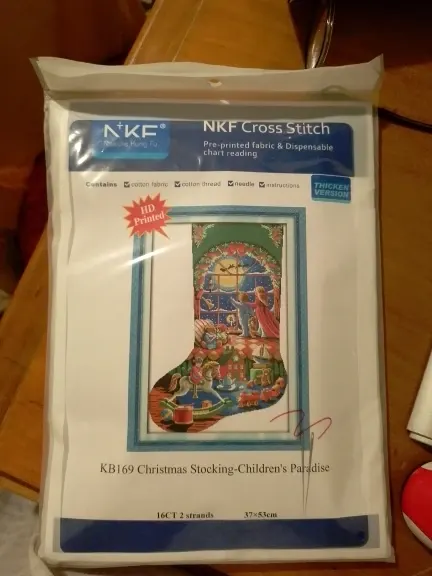
- Complete contents. We empty the box and tick every item against the stated list: fabric, threads, needle, instructions, chart. On our Christmas stocking kit, our sample pouch checklist marked cotton fabric, cotton thread, needle and instructions, and all four were in the box.
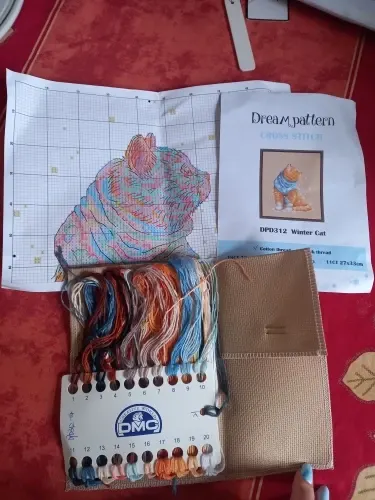
- Enough thread, with margin. We check the thread card against the chart legend: every symbol present, every color labeled, and generous amounts of the heavy-coverage colors. Running out of one shade mid-project is the single most demoralizing kit failure there is.
- A readable chart. We read the chart at arm's length in normal lamp light. Symbols must be distinct, the grid must be crisp, and printed guides on stamped fabric must be sharply aligned to the weave. If we squint at a sample, a beginner will suffer, and the kit fails.
- Clean, properly finished fabric. We check the fabric for stains, creases that will not press out, and raw edges that fray. Overlocked or trimmed edges are what we want to see, and buyer photos of our kits consistently show them.
- Honest difficulty. We estimate real stitching hours and say them out loud on the product page, even when the honest number is 60 to 100 hours for a stocking. A kit that is wonderful for an experienced stitcher can be a miserable first project, so we label who each kit is for.
How we select designs, not just kits
A mechanically perfect kit can still have a weak design, so selection starts before the checklist. We look for designs with clear focal points that read well from across a room, color palettes that stay attractive after years on a wall or a mantel, and imagery that suits the format, which is why our stamped range is built on Christmas stockings. We check buyer photo galleries to confirm the stitched result matches the listing art, and we drop designs that only look good as digital renders. Text on a design must be in English, and designs with a name band are sold as personalizable: you stitch the name yourself, so the example names in photos are illustrations, never the product.
What the ratings on this site mean
The star ratings you see on product pages reflect verified buyer feedback from our supplier for that exact kit, and the photos on our reviews page are buyer photos as posted. We show the real numbers, including the ratings that are not five stars, because that is the information we would want ourselves.
Where the checklist stops
We check every kit design we list, but we have not stitched all 23 stocking designs to completion; nobody alive has that much December. Our stitching hours are estimates built from our own projects and stated as ranges, and fabric measurements come from the actual kit labels we photograph. When something is an estimate, the product page says so. Whether you start with a beginner kit or a counted kit, every order carries the same 30-day money-back guarantee detailed in our refund policy, so a kit that disappoints you costs you nothing.
This methodology is maintained by Jasmine Cole, who runs every check personally. Questions about it? Ask us directly.