By Jasmine Cole, cross-stitch designer and stitcher ·
Stamped vs Counted Cross Stitch: Which One Is Right for You?
Every week someone asks me which style they should buy first, and the honest answer is that both produce beautiful finished pieces with exactly the same stitches. The X you form on printed fabric is identical to the X you form on blank aida. What changes is how you know where that X belongs.
That single difference shapes the whole experience: how much attention the work demands, how portable it is, what can go wrong, and even how the finished surface looks under glass. Having designed and stitched both styles for the CozyCross line, I will lay out the real differences so you can pick with confidence instead of guessing.
What Is Counted Cross Stitch?
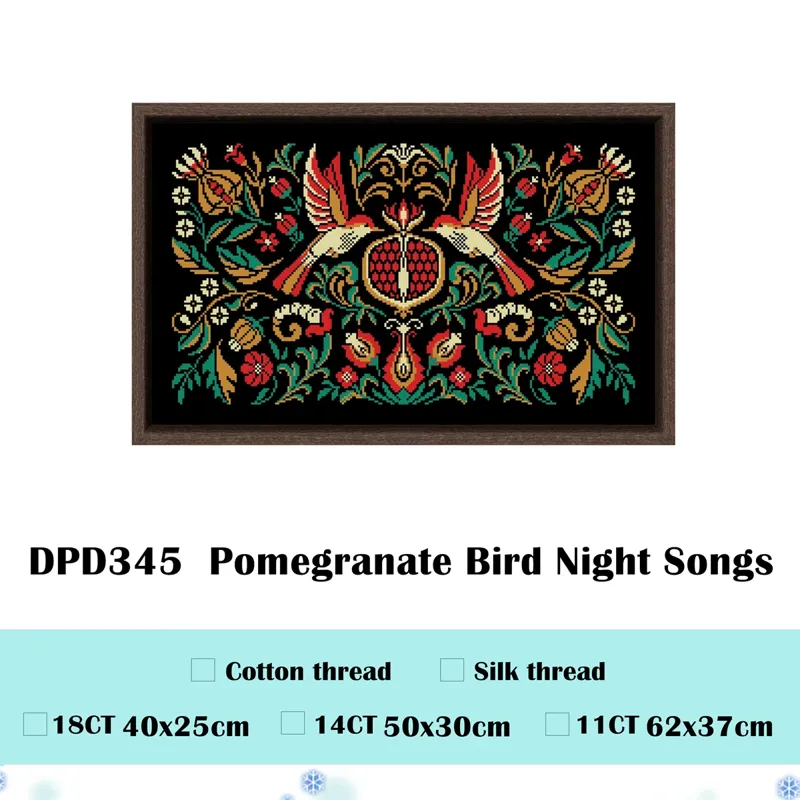
Because nothing is printed, the fabric itself can be any color that flatters the design: crisp white, sky blue, or the dramatic black aida we use for our folk bird kits. Dark and colored fabrics are a counted-only luxury, since printed lines would be invisible on them.
Counted work rewards precision. Stitches land exactly where the designer intended, edges stay razor sharp, and intricate samplers with dozens of colors stay manageable because the chart tracks everything. The tradeoff is attention: you are counting as you go, and a miscount left uncaught means unpicking. If you have never read a chart, my guide on how to read a cross stitch pattern covers symbols, legends, and the 10 by 10 grid in plain language.
What Is Stamped Cross Stitch?
Stamped kits remove the counting layer entirely. You can stitch in front of a movie, on a train, or in a waiting room without dragging a chart along, because the fabric is the chart. For many people that makes stamped the more purely relaxing of the two styles.
Quality matters more with stamped kits than anywhere else in this craft. A sharp, high-definition print with clear color separation is a joy; a blurry print turns every ambiguous mark into a small decision. It is the main thing we screen for when selecting the stamped cross stitch kits we carry, and you can read how we evaluate print sharpness on our how we test page.
Side-by-Side Comparison
| Criteria | Stamped | Counted |
|---|---|---|
| Learning curve | Minimal, stitch over the print | Moderate, chart reading and counting |
| Risk of position mistakes | Very low | Real, but contained with good habits |
| Edge crispness and detail | Good, limited by print accuracy | Excellent, stitch-perfect placement |
| Fabric colors available | White or light fabric only | Any color, including black and sky blue |
| Portability | Excellent, no chart needed | Good, chart must travel with you |
| Design variety on the market | Smaller | Very large |
| Finishing steps | Wash out ink, dry flat, frame | Wash, dry flat, frame |
Who Should Choose Stamped
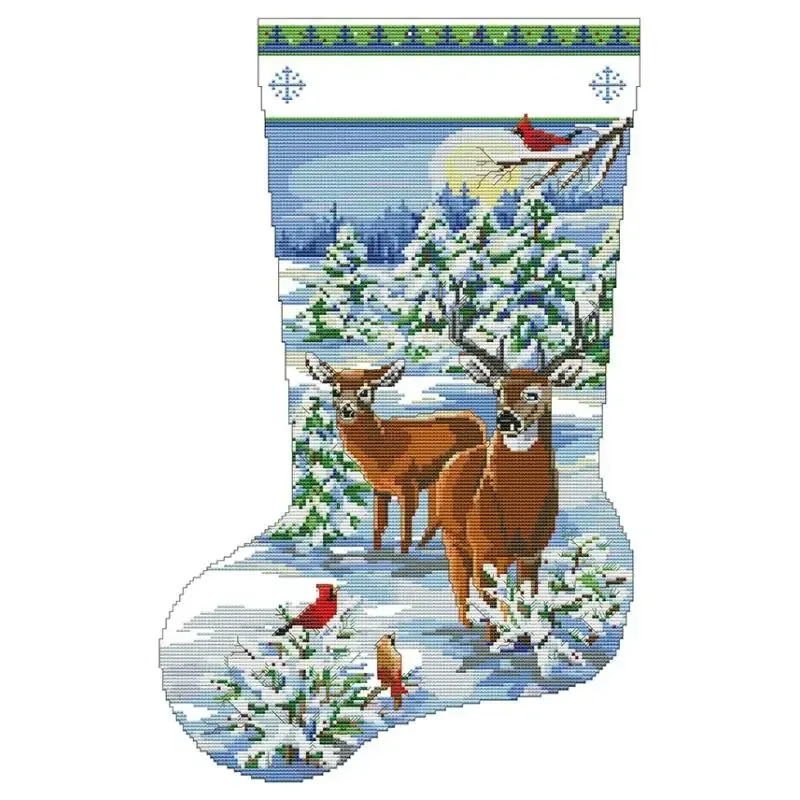
Stamped is also the practical pick for large, dense designs like full-coverage Christmas stockings, where counting thousands of stitches across a big canvas would be a serious undertaking. Our Christmas stocking cross stitch kit line exists in high-definition printed versions for exactly this reason: heirloom-scale designs that stay finishable in the weeks before the holidays.
The relaxation argument is not just anecdotal, either. The largest survey on needlecraft and wellbeing found a measurable link between stitching and mood.
of survey respondents who had depression reported feeling happy after a knitting-style needlecraft session, in the most cited study on stitching and wellbeing
— Riley et al., British Journal of Occupational Therapy, 2013
Who Should Choose Counted
There is a distinct satisfaction in watching a design emerge from truly blank fabric, and stitchers who cross over from stamped often describe counted as more engaging for the same reason it is more demanding. The counting becomes part of the pleasure rather than a chore.
If that sounds like you but you are still new, start small: a compact motif on 14-count from our beginner cross stitch kits, stitched center-out with the habits from my complete beginner's guide, is a very safe first counted project. Avoiding the classic traps helps too; I collected them in 10 beginner cross stitch mistakes.
When One Design Comes Both Ways
A real example from our line: every stocking design in our Christmas stocking collection is available five ways: high-definition printed fabric in 11, 14, or 16-count, or blank fabric for counted stitching in 11 or 14-count. Same design, same floss, five different experiences. The 16-count printed version of one stocking we stitched measured 14.6 by 20.9 inches, worked with two strands.
This dual-format approach is the easiest way for a household with mixed experience levels to stitch together: one person takes the printed version, another takes the counted chart, and the finished stockings hang side by side looking like a matched set. It is also a low-risk way to test which style you prefer before committing to a bigger project. Browse the full range of both styles from our cross stitch kits homepage, or see what other stitchers picked in our customer reviews.
Stamped vs Counted FAQ
Is stamped or counted better for beginners?
Stamped is the gentler start because there is no counting. That said, many beginners start counted on a small 14-count design and do fine. Choose stamped if charts intimidate you, counted if you enjoy following a map.
Does the printed ink wash out?
Yes. Quality stamped kits use water-soluble ink designed to disappear in a cool hand wash after stitching. Always wash before framing so no printed lines remain visible around your stitches.
Do stamped kits include a chart too?
Usually yes. Most stamped kits ship with a printed chart as a color reference, so you can check shades and details even though the placement is already on the fabric.
Is counted cross stitch harder than stamped?
It demands more attention rather than more skill. The stitches are identical; counted adds chart reading and counting. Most stitchers find counted more absorbing and stamped more meditative.